Cremation and the Catholic Faith: What Catholic Families Should Know
For many Catholic families, cremation can bring important questions. Is cremation permitted by the Catholic Church? What should happen to cremated remains? Can they be kept at home, scattered, or divided among family members?
These are common questions, and they deserve clear, compassionate answers.
The Catholic Church does permit cremation when it is chosen in keeping with the teachings of the faith. While the Church continues to prefer traditional burial because it more clearly reflects our belief in the dignity of the body and the hope of resurrection, cremation is allowed when it is not chosen for reasons that go against Catholic teaching.
What matters most is that cremated remains are treated with the same dignity, reverence, and respect as the body.
What Does the Catholic Church Teach About Cremation?
The Catholic Church teaches that the human body should always be treated with dignity, both in life and after death. For this reason, cremated remains should be cared for in a way that reflects the sacredness of the person and the Catholic belief in eternal life.
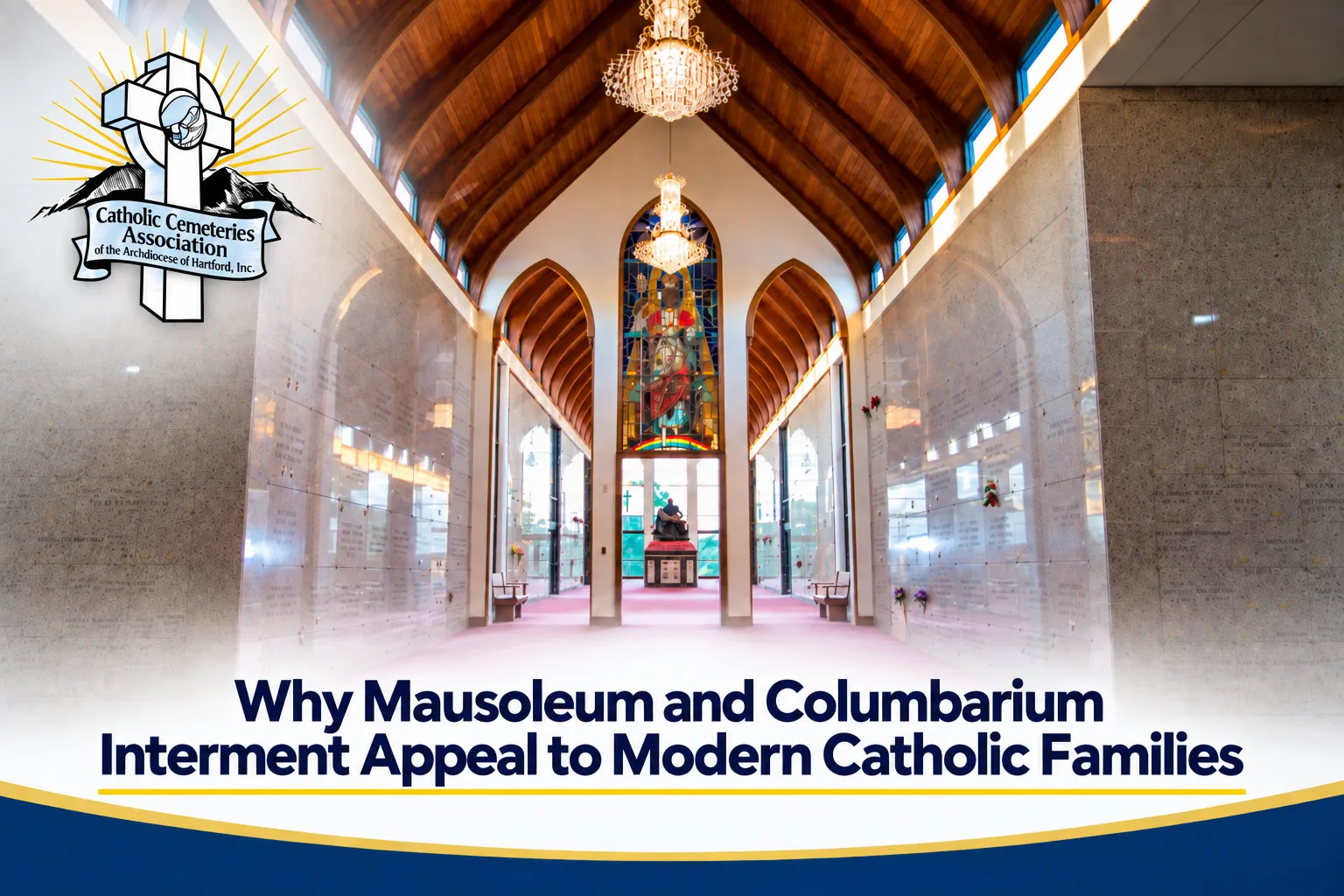
When a loved one is cremated, their remains should be placed in a sacred, permanent location such as a mausoleum niche, columbarium, cremation garden, or burial space in a Catholic cemetery.
A Catholic cemetery provides more than a final resting place. It is consecrated ground, set apart for prayer, remembrance, and hope. It gives family and friends a permanent place to visit, pray, and remember their loved one.
Why Sacred Placement of Cremated Remains Matters
The Church does not support practices such as scattering cremated remains, keeping them at home permanently, dividing them among relatives, or placing them in jewelry or other personal keepsakes. While these choices are often made out of love, they do not reflect the Church’s teaching on the sacred care of the human person after death.
Choosing sacred placement for cremated remains is an act of love and faith. It ensures that a loved one is cared for with dignity and placed in a setting that reflects Catholic teaching.
It also protects future generations. When cremated remains are placed in a Catholic cemetery, children, grandchildren, and other loved ones have a lasting place to visit. They can bring flowers, say a prayer, attend Masses of Remembrance, and remain connected to the family’s faith and history.
In this way, sacred placement becomes part of a family’s legacy.
Catholic Cemetery Options for Cremated Remains
Catholic Cemeteries Association offers several sacred and dignified options for cremated remains across our 30 cemeteries, all within consecrated ground. Families may choose from:
- Mausoleum niches
- Glass-front niches
- Outdoor columbaria
- Cremation gardens
- In-ground burial
- Burial with a loved one in consecrated ground
Each option provides a permanent place of honor where loved ones can be remembered with dignity, where family and friends can return to pray, and where cremated remains are cared for in keeping with the teachings and traditions of the Catholic faith.
Cremation, Catholic Tradition, and Family Legacy
July is a meaningful time to reflect on family heritage, especially as the Church honors St. Joachim and St. Anne, the grandparents of Jesus. Their lives remind us that faith is often passed down quietly and lovingly from one generation to the next.
The decisions we make today can help guide and comfort those who come after us. Choosing a Catholic cemetery for cremated remains is one way to pass down faith, respect, and tradition. It shows future generations that our loved ones are never forgotten and that their lives remain part of our family story.
Catholic Cemeteries Association Is Here to Help
Whether you are planning ahead or making arrangements for someone you love, Catholic Cemeteries Association is here to answer your questions and help you understand the cremation options available within the Catholic faith.
Cremation is permitted by the Catholic Church when chosen in keeping with the teachings of the faith. By placing cremated remains in a sacred, permanent location, families honor their loved ones with dignity, preserve a place of prayer and remembrance, and remain rooted in the hope of resurrection.